
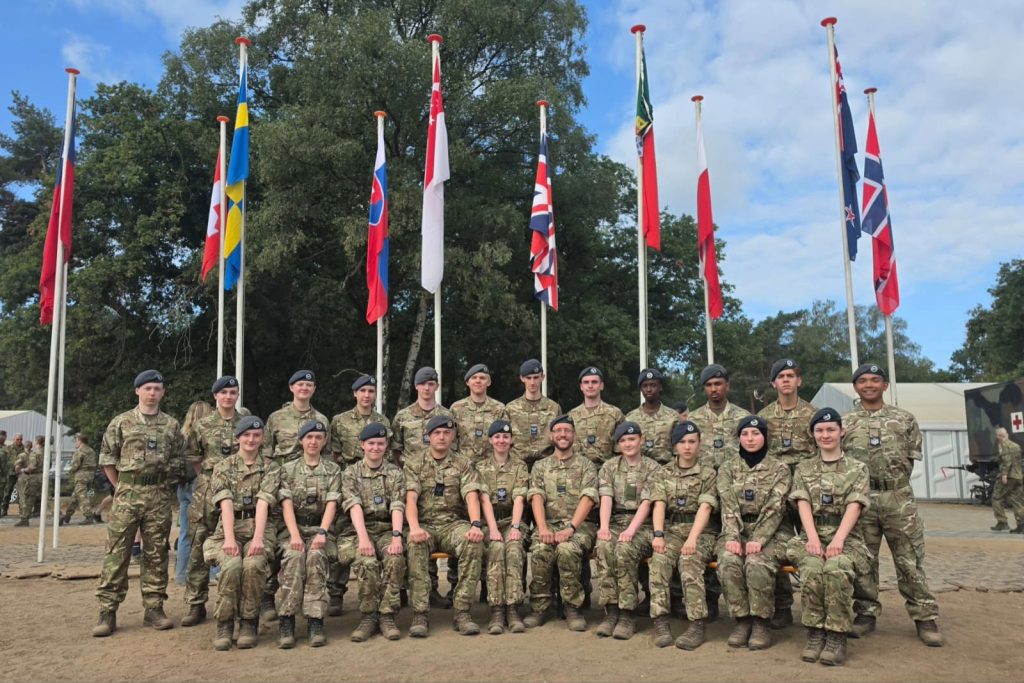
Four Days, 160 kilometres, One Team
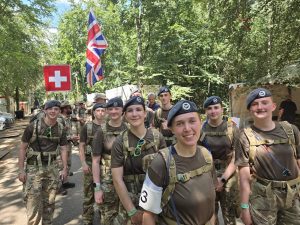
Walking a marathon every day for four consecutive days is daunting enough. Doing it in full military uniform, carrying a 10 kg pack, and marching under the scorching July sun across the Netherlands takes the challenge to another level. Yet, for hundreds of Royal Air Force Air Cadets, the International Four Days Marches in Nijmegen, Holland is far more than an endurance test: it is an unforgettable experience shaped by resilience, teamwork, hospitality, and celebration.
As part of the 2026 London and Southeast Region (LaSER) Team, our Cadets took on a journey defined by camaraderie, unity, and an electric atmosphere. More than anything, the Nijmegen Marches became a powerful reminder of the special bond between the Dutch public and the British military.
Pain with a Purpose
The journey to Nijmegen does not begin in Holland; it starts months earlier on freezing winter weekend mornings back in the UK. Qualifying for the Nijmegen Marches demands rigorous build-up walks, relentless foot-care drills, and hours spent building the cohesion needed to march as one team.
For Sgt Fidler (1404 Sqn RAFAC), the months leading up to the main event were just as critical as the event itself: “The training was intense right from the start. We were putting in 50- to 80-kilometre weekend walks in all kinds of weather just to get our legs conditioned. It wasn’t just about physical fitness; the training taught us how to manage our feet, stay hydrated, and sync our marching pace as a team. By the time we landed in Nijmegen, we knew we had the mileage in our legs to handle it.”
Testing Cadet Resilience
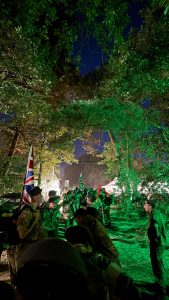 Once on the ground, the reality of the Nijmegen Marches hits quickly, alongside an atmosphere unlike anything most Cadets have experienced before. Day One begins in the darkness of a 04:45 start, surrounded by thousands of military marchers from across the globe. By Day Three, famously known as the Day of Groesbeek for its relentless rolling hills, morale can falter under the weight of blisters, aching muscles, fatigue, and the constant 10 kg load.
At that point, resilience shifts from a buzzword into a daily survival mechanism, as CWO Callaghan-Jarvis (40F Sqn RAFAC) reflects: “Around the 30-kilometre mark on Day Three, everyone hits a wall. Your feet are burning, your knees are throbbing, and every step takes real effort. That’s where the mental resilience kicks in. You stop thinking about the 160 kilometres as a whole and just focus on getting to the next rest stop, relying on your team to pull you through the dark patches.”
Powered by Staff Support
No Cadet reaches the finish line on the Via Gladiola alone. Behind every successful team is a dedicated cadre of RAFAC volunteer staff, working around the clock to prepare the teams, support them on the road, and help lift them through the hardest miles.
Sqn Ldr Wendy White, LaSER Regional Road Marching Officer, highlighted the dedication shared by both Cadets and staff: “The Cadets never fail to inspire me with their incredible spirit and determination, but their success is equally a testament to our tireless staff, who support them through every single mile.”
That behind-the-scenes commitment was deeply felt by the marchers themselves, as Sgt Watson (359 Sqn RAFAC) explains: “We honestly couldn’t have crossed that finish line without our staff team. Having our team leaders marching right alongside us the entire way gave us so much confidence and knowing the support crew was waiting to look after us at every single stop kept us moving forward. Combined with the incredible Dutch crowds cheering us on, it gave us that second wind right when we needed it most.”
A Festival of Respect and Hospitality
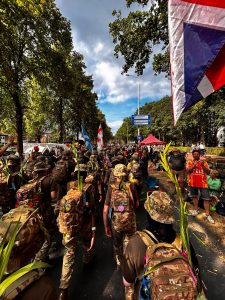 What makes Nijmegen truly unique, however, is the wall-to-wall public support that lines every single kilometre of the route. Streets are transformed into vibrant festival zones with music, street parties, and whole communities out on their doorsteps to cheer on the contingents.
For British marchers, the reception is profoundly moving. The deep historical gratitude and respect the Dutch people hold for the British Armed Forces is felt in every village and town along the way. Local residents line the roads offering high-fives, fresh fruit, drinks, and heartfelt thanks. Passing through towns like Elst and Wijchen, the roar of the crowds shouting support for the British teams turns a gruelling march into a triumphant parade.
Crossing the Via Gladiola
When the team finally reaches the final leg on Day Four, the atmosphere reaches a crescendo. Stepping onto the world-famous Via Gladiola, surrounded by hundreds of thousands of cheering spectators showering marchers with traditional gladioli flowers, the pain instantly fades into pure pride. The admiration shown to the British uniform as the Cadets march past in formation is a memory that stays with them forever, culminating in the presentation of the prestigious Vierdaagsekruis (Four Days Medal).
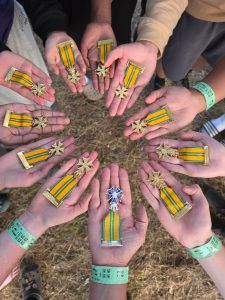 Looking back on the achievement, CWO Groombridge (2433 Sqn RAFAC) captures the true spirit of the accomplishment: “It is the most demanding challenge, both physically and mentally, I have completed during my time in Cadets, but it pushed me to learn how to challenge my own boundaries. I enjoyed every moment, interacting with the crowds and the other teams, as well as singing endless songs with my own. I couldn’t have done it without the support and encouragement that everyone gave constantly throughout the Four Days.”
For the LaSER Team Cadets, the Vierdaagse proved that endurance is built not only through training, but through trust, encouragement, and the shared pride of marching together. It is an experience that will stay with them well beyond the Via Gladiola.
For future Cadets, it stands as an invitation to step forward, take on the challenge, and discover what they are truly capable of achieving: a true embodiment of the RAFAC motto, Venture Adventure.
The RAF Air Cadets offer young people exciting opportunities for personal and professional development. They’re an inclusive organisation that cares about helping young people reach their potential and provide aviation based training giving young people confidence, leadership and team working skills ready to prepare them for either service in the military or to excel in civilian life.
Find out more below: